
Homeowners often want a simple price-per-square-foot answer for a new roof. Roofing rarely works that way. Two Minnesota homes with similar living area can require very different amounts of material, labor, access planning and detail work. The useful question is not just “What does a roof cost?” but “What is included in the roof I am being priced?”
This guide explains the variables that usually change a roof-replacement proposal in Minnesota and western Wisconsin so you can compare scopes intelligently before you sign.
Roof size starts with the roof, not the house
A 2,000-square-foot house does not necessarily have a 2,000-square-foot roof. Roofers measure the actual sloped surface, including overhangs and attached sections. Pitch, garages, porches, dormers and intersecting rooflines can make the roofing area substantially larger than the home's finished floor area.
Roofing is commonly measured in squares, with one square representing 100 square feet of roof surface. Complicated roofs generally need more material allowance for cuts and waste than simple gable roofs.
Pitch, height and access affect labor
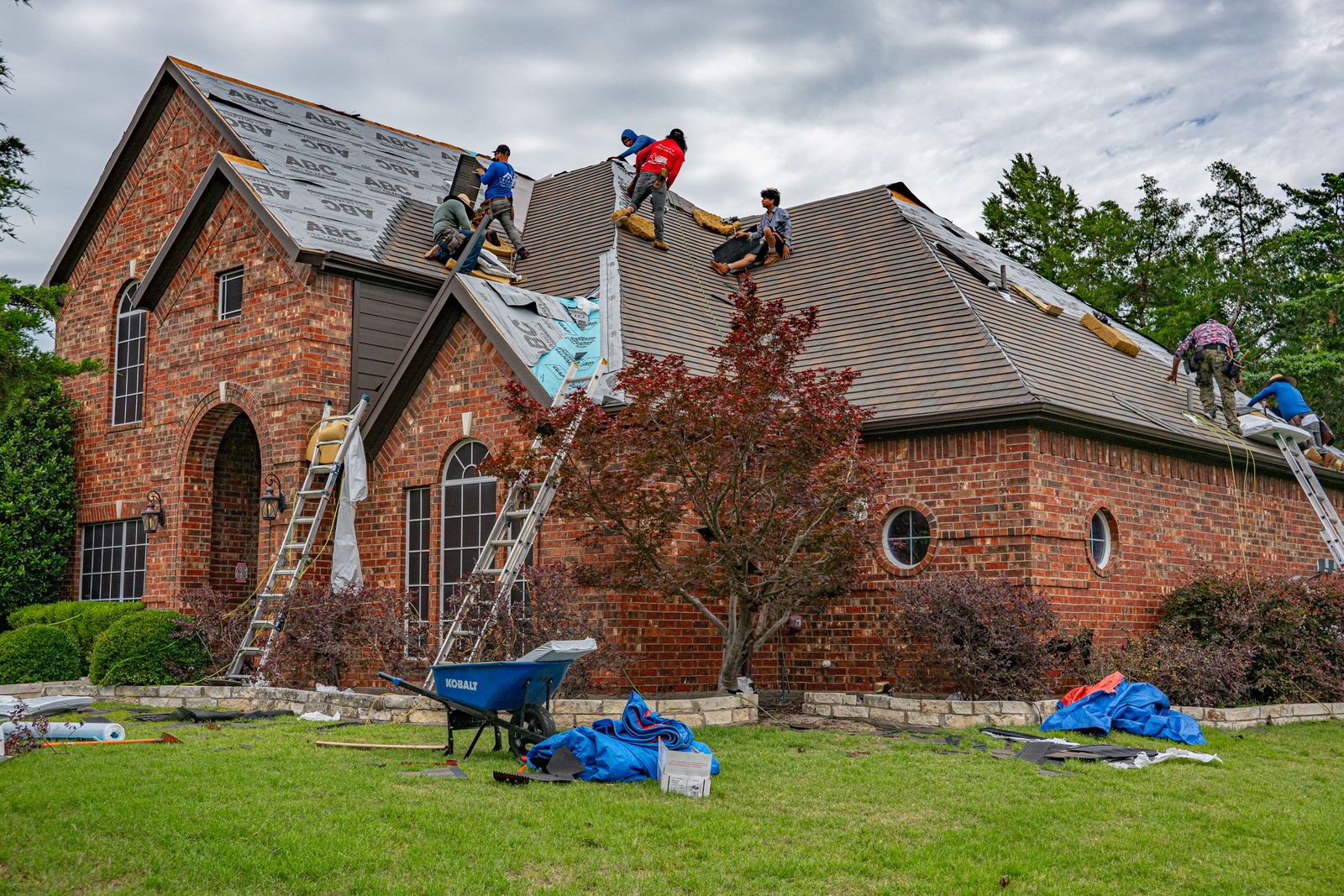
A low, walkable one-story roof is different work from a steep two-story roof with limited ladder access. Steeper slopes can require additional fall-protection measures, staging and slower material handling. Tight lots, fences and landscaping can also change delivery and debris-removal logistics.
Tear-off is part of the real project
Replacement pricing should say what happens to the existing roof. Removing one layer of asphalt shingles is not the same scope as removing multiple layers. Tear-off also includes protecting the property, moving debris from the roof and disposal. Ask what the proposal assumes and how an unexpected additional layer would be handled.
Decking can be the biggest unknown before tear-off
The wood roof deck sits below the roofing materials, so not every problem is visible during an exterior inspection. Soft, delaminated or deteriorated sheathing may only become obvious after shingles and underlayment are removed. A professional proposal should explain how unforeseen decking replacement is documented and priced, preferably with a clear unit price or method.
The shingle is only one part of the roof system
It is easy to compare estimates by shingle brand and color, but much of the performance comes from components that disappear after the job is finished. A complete system can include ice-and-water membrane, underlayment, starter shingles, field shingles, hip and ridge shingles, drip edge or gutter apron, valley materials, ventilation components and pipe boots.
In the Upper Midwest, roof-edge protection and vulnerable transitions deserve particular attention because snow, ice and freeze-thaw cycles repeatedly test those areas. A lower proposal may simply include fewer accessories or less replacement work.
Flashing details can separate scopes
Roof-to-wall intersections, chimneys, skylights and penetrations are common leak-risk areas. Some existing metal may be reusable when it is compatible and in suitable condition; other flashing should be replaced. The estimate should say what the contractor intends to do. If one bid includes new step flashing and pipe boots while another says only “replace roof,” they are not equivalent proposals.
Ventilation should be evaluated with the roof
Attic ventilation is part of the roof system. Intake and exhaust need to work together, and the appropriate design depends on the home. A roof replacement is a logical time to evaluate whether existing vents are being replaced in kind or whether changes are needed. Ventilation is also connected to attic air sealing and insulation, so new shingles alone cannot solve every winter moisture or ice-dam problem.
Permits, disposal and protection belong in the comparison
Know whether permit costs, debris disposal, delivery, cleanup and magnetic nail pickup are included. Property protection can matter on homes with gardens, air-conditioning equipment, decks, windows or delicate landscaping close to the roof edge. These details help reveal whether you are comparing complete projects.
Why price per roofing square can mislead
Dividing a proposal by the measured number of roofing squares can be useful as a rough comparison, but it is not a universal market price. A simple 25-square gable and a 25-square steep, cut-up roof can have the same area while requiring very different labor, waste, flashing and staging. Price per square is most useful only when the roofs and scopes are genuinely similar.
How to compare roofing proposals fairly
Put estimates next to each other and compare the actual scope before comparing totals. Confirm measured roof area, tear-off assumptions, shingle and accessory products, ice-and-water protection, underlayment, starter and ridge materials, flashing, ventilation, decking pricing, permits, disposal, property protection and warranties.
If one proposal is dramatically lower, ask what explains the difference. Sometimes the contractor has a different cost structure. Other times the cheaper bid is pricing a different job. The goal is to understand what you are buying.
Budget for known scope and a reasonable unknown
Your contract should define as much known work as possible and explain how concealed conditions will be handled. That creates a more realistic budget than assuming the initial number can never change. If siding, gutters or windows are also approaching replacement, discuss those plans before roofing begins so transitions can be coordinated.
Bottom line
The cost of a Minnesota roof replacement is driven by measured roof area, complexity, access, tear-off, deck condition and the completeness of the roofing system—not just the shingle selected. The best way to get a useful number is to have the actual property evaluated and insist on a written scope detailed enough to compare.
Solaris provides roof replacement and repair throughout the Twin Cities and serves homeowners in Minnesota and Wisconsin. For a property-specific scope, request a free estimate.
General homeowner education only. Roofing requirements, permit rules, product specifications and site conditions vary by property and municipality.